

Split By Trauma, Held Together By Parts
Split By Trauma, Held Together By Parts
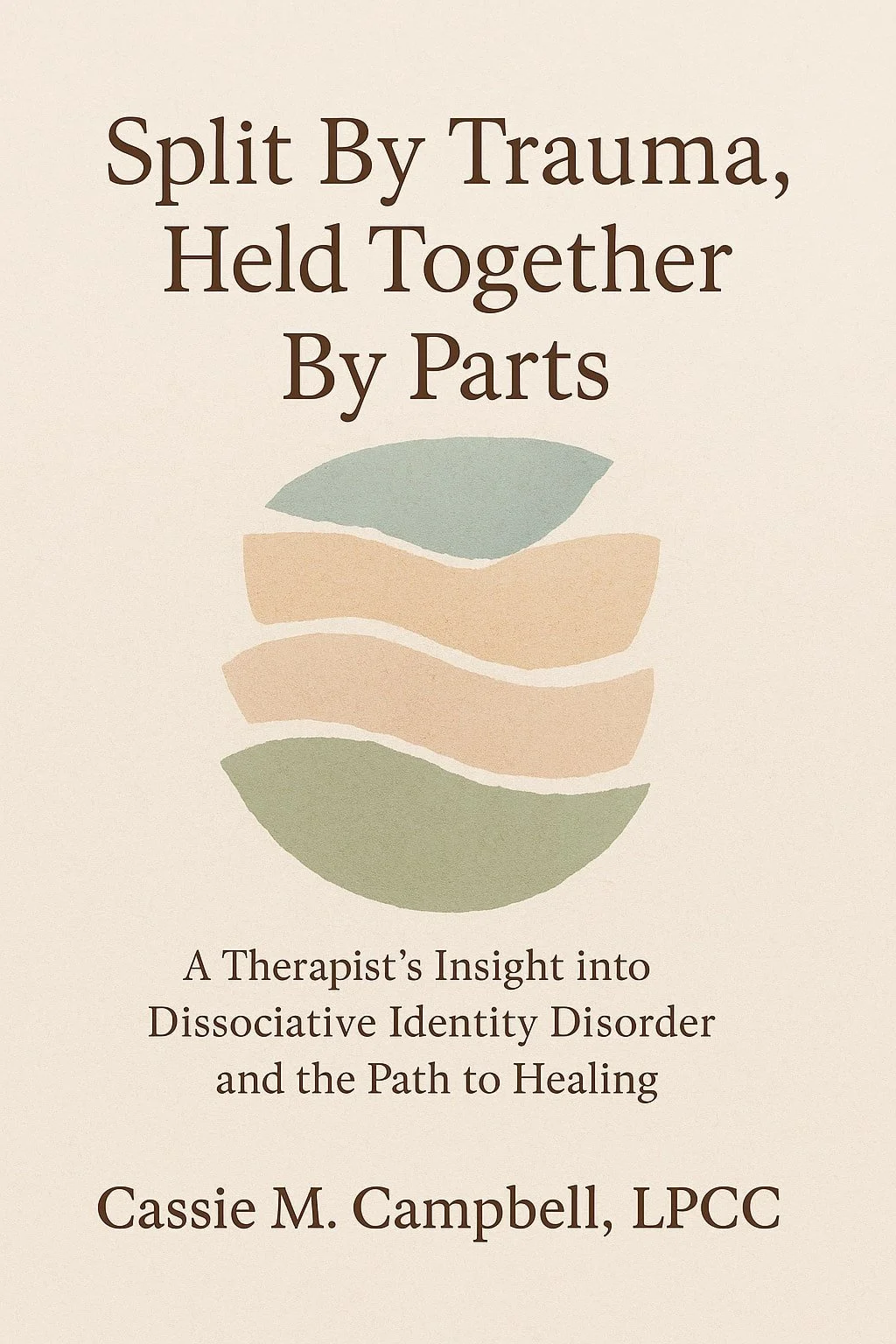
A Clinically Grounded Guide for Therapists Working with Complex Trauma and Dissociation
Split by Trauma is written for therapists who work with complex trauma and dissociative systems — and who understand that effective trauma treatment begins with stance, pacing, and safety.
This is not a beginner trauma book.
It is not a protocol manual.
It does not offer quick fixes.
Instead, this text centers the foundations required for ethical and effective work with dissociation: regulation, relationship, humility, and respect for the system’s pace.
Drawing from neuroscience, attachment theory, structural dissociation, and somatic approaches, Split by Trauma reframes dissociation not as pathology — but as an intelligent adaptation to chronic developmental threat.
It explores how early trauma shapes the nervous system, fragments experience into parts, and disrupts integration — while emphasizing that healing occurs through safety, steadiness, and relational presence.
-
This book is written for:
Licensed therapists treating complex trauma
Clinicians working with dissociation and DID
EMDR therapists seeking ethical adaptations
Providers who understand trauma fundamentals and want deeper clarity
Therapists committed to slowing down rather than pushing through
If you are looking for scripts or symptom-based techniques, this is not that book.
If you are looking to refine your clinical stance and deepen your trauma-informed lens, this text was written for you.
-
A developmentally informed framework for understanding dissociation and parts
Clear guidance on safety, stabilization, and pacing as treatment foundations
Neurobiological context for fragmentation and integration
Ethical adaptations of EMDR and somatic approaches for dissociative systems
Clinical insight into disorganized attachment, shame, and protector dynamics
Emphasis on therapist regulation, supervision, and limits of competence
Throughout the book, the focus remains on walking with clients rather than ahead of them.
Integration is understood broadly — not as forced fusion, but as increasing communication, cooperation, and shared presence across parts.
-
Healing does not happen because we fix people.
It happens because we remain regulated enough to sit with what emerges.
Split by Trauma invites clinicians to slow down, stay curious, and approach dissociation with steadiness rather than urgency.
-
Cassie M. Campbell is a licensed trauma therapist in California and Texas specializing in EMDR and nervous system-informed trauma care. Her clinical work focuses on complex trauma, dissociation, attachment disruption, and ethical pacing in trauma reprocessing.
Her work emphasizes humility, regulation, and respect for the protective intelligence of dissociative systems.